Building Early Sensory Skills: A Montessori Guide for Babies 0–12 Months
December 5,2025
A baby’s first year is a sensory explosion. Every color, sound, texture, and movement shapes how the brain forms connections. Montessori education recognizes the importance of sensory development and emphasizes creating environments that are calm, purposeful, and designed for exploration.
This article explores how to support sensory growth from a Montessori perspective—and how to give your baby a strong foundation for learning through touch, sound, and movement.
Title
Why Sensory Development Matters in the First Year
Sensory input helps babies understand the world and form neural pathways that support later skills like language, balance, attention, and emotional regulation.
Key sensory systems developing during the first year include:
Touch (tactile) – helps babies feel safe
Motion & balance (vestibular) – supports head control & sitting
Body awareness (proprioception) – coordinates movement
Sight – improving clarity and depth perception
Hearing – recognizing voices, rhythms, and patterns
Offering rich but calm sensory experiences helps strengthen these systems without overstimulation.
Title
Montessori Principles for Supporting the Senses
Montessori environments focus on:
Natural materials
Soft colors
Gentle lighting
Open space for movement
A peaceful atmosphere
Less noise and clutter allows the baby’s senses to focus more deeply.
Title
Practical Ways to Build Sensory Skills (Month by Month)
0–3 Months: Calm Sensory Awareness
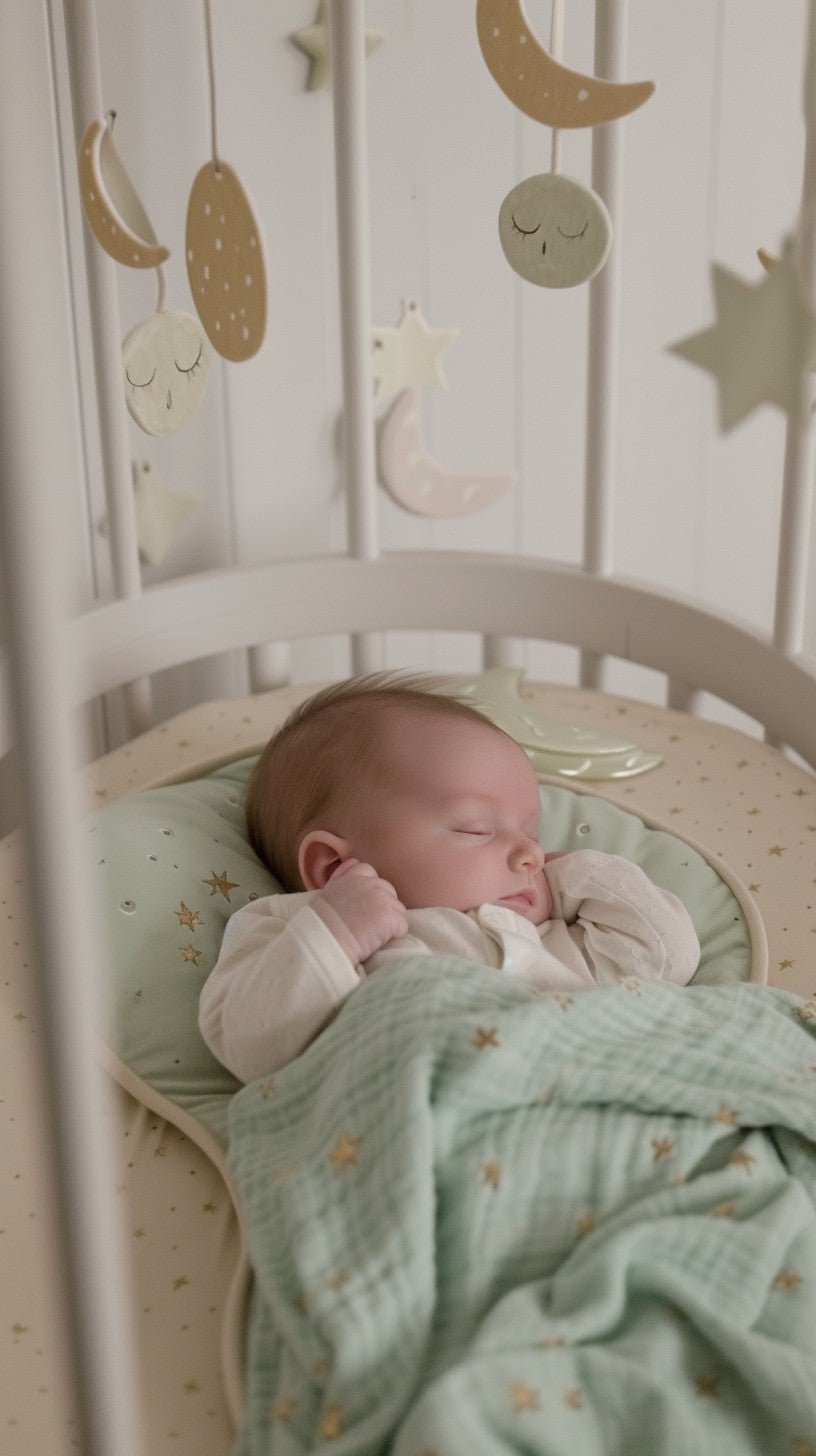
Newborns benefit from soft textures, gentle movements, and dim light. Tummy time provides natural resistance to strengthen sensory pathways.
3–6 Months: Reaching, Grasping & Exploring
Babies start exploring objects with both hands and mouth. Offer wooden rattles, cloth balls, and simple objects—rotated weekly.
6–9 Months: Self-Motion and Spatial Discovery
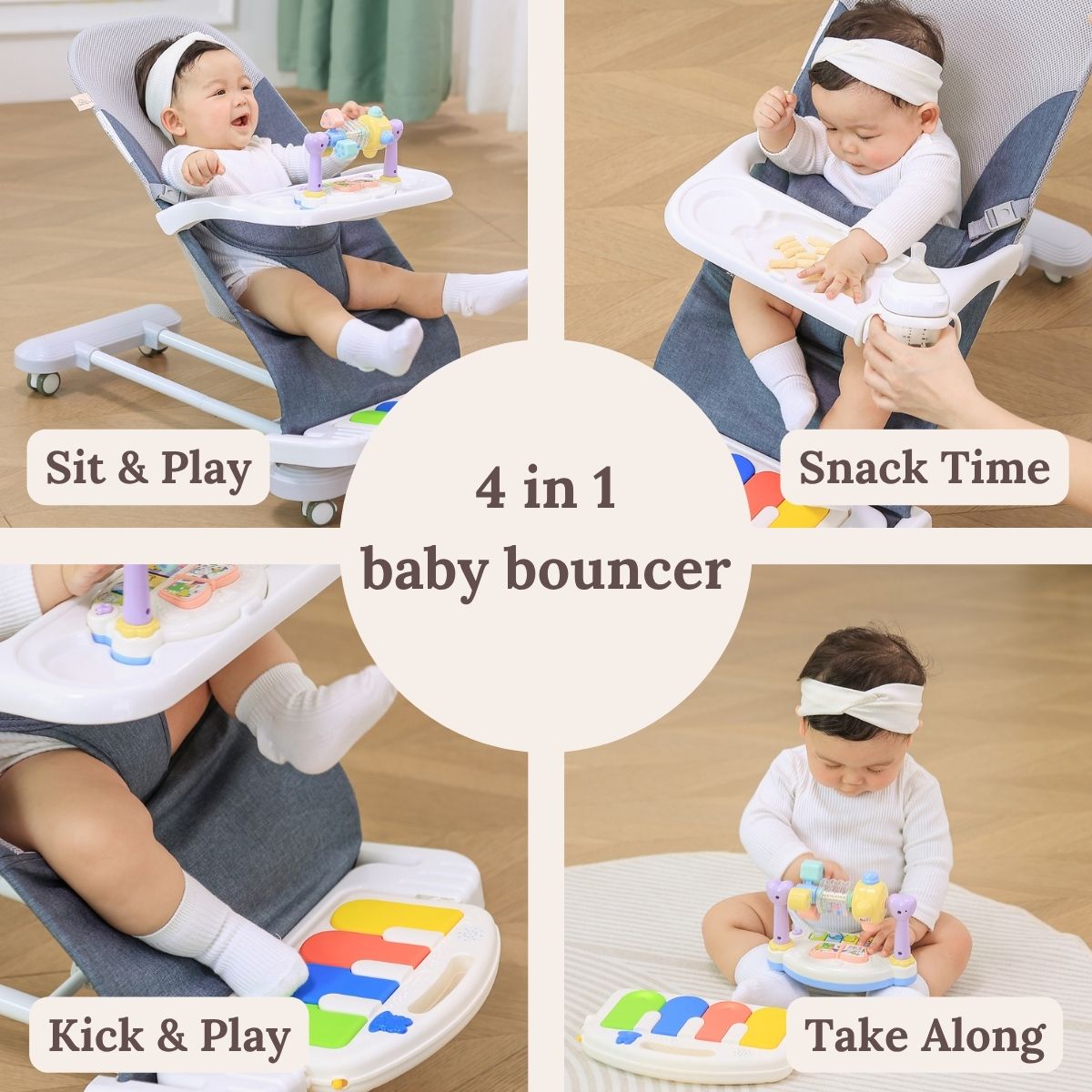
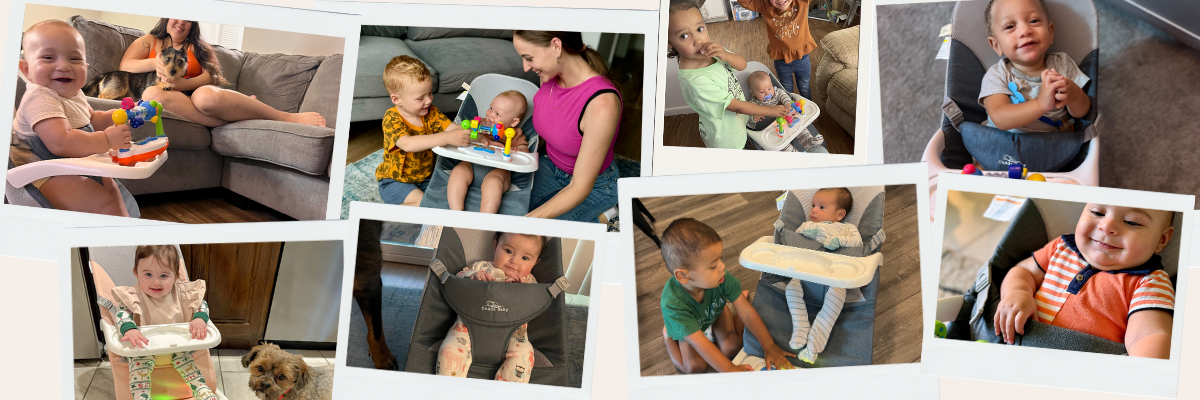
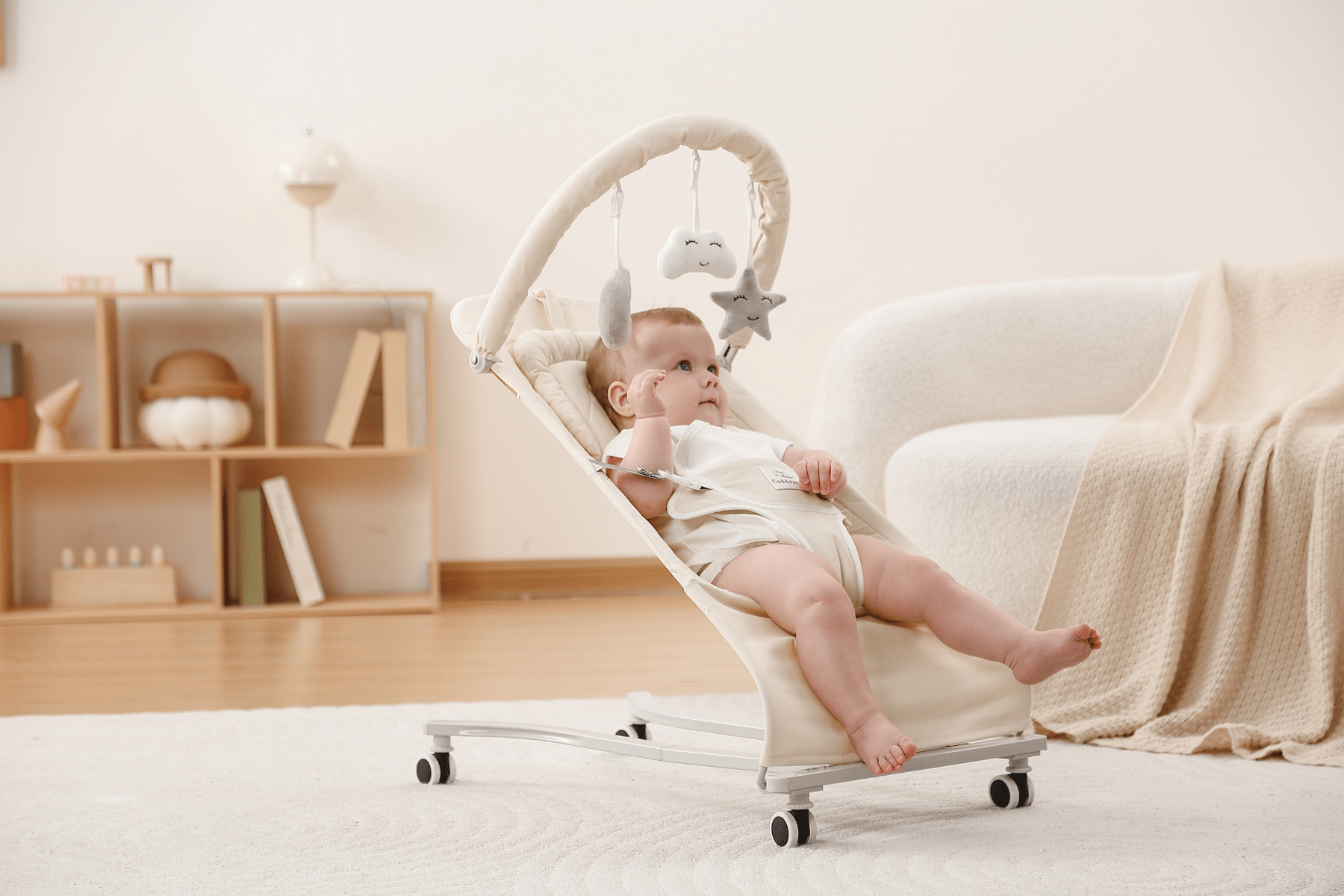
Babies begin to roll, sit, pivot, and observe from multiple angles. A supportive seat—like a montessori baby bouncer—may help babies view their surroundings while allowing natural body movement.
9–12 Months: Mobility and Curiosity
Crawling, pulling to stand, cruising, and climbing introduce new sensory challenges. Offer low shelves, safe pull-up supports, and open space to explore.
Title
Creating a Montessori Sensory Environment
You can support your baby’s senses through simple steps:
1. Use Natural Materials
Wood, fabric, metal, and silicone offer varied tactile feedback.
2. Provide Opportunities for Movement
Movement is a sensory activity—rolling, kicking, and crawling stimulate multiple systems at once.
3. Keep Toys Minimal
Babies focus better with fewer items in their environment.
4. Follow Your Baby’s Lead
If your baby returns to a toy or movement pattern, it’s part of a developmental need.
5. Offer Safe Observation Points
Brief use of tools—such as a montessori newborn bouncer—can support calm observation without overstimulation.
Title
Montessori Sensory Activities You Can Try
Hanging visual mobiles
Soft fabric texture baskets
Wooden rattles or rings
Low mirror for tracking movement
Sound exploration with bells or shakers
Floor movement maze with pillows
Gentle water play with supervision
These simple experiences strengthen the baby’s ability to process sensory information.
Subscribe
To join our mailing list and never miss a baby update!